
Accessing Frumzi Casino via Mobile in Hungary
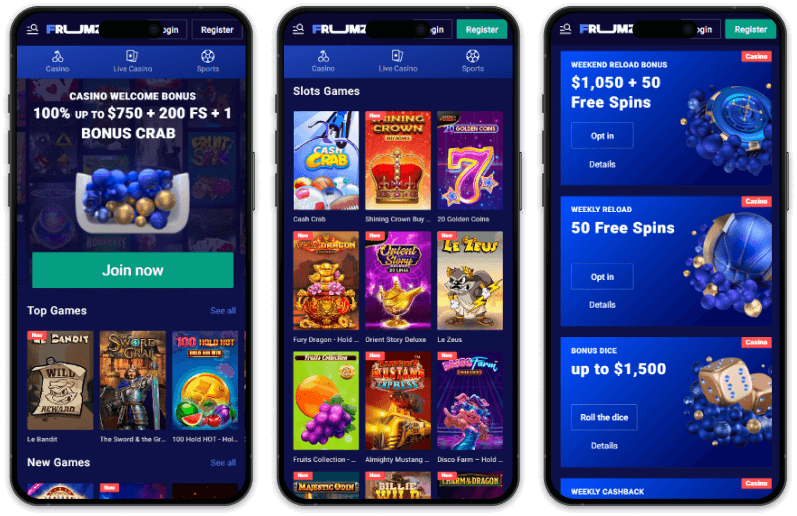
I have assisted many Hungarian players through their first mobile login session at Frumzi Casino, and I know how vital it is that the process feels both uncomplicated and secure from a handheld screen. The mobile login page is designed to detect touch input immediately, so the fields for your email or username and password adapt to whatever browser you use on Android or iOS. In this article I guide you through every practical aspect of the mobile account journey, from the moment you choose to sign up, through identity checks and login protections, to regaining a forgotten password without leaving your phone. I also describe the verification steps that ensure your account remains protected under Hungarian regulatory standards. My aim is to give you a clear, step‑by‑step understanding that removes any guesswork when you first pick up your device.
Completing KYC Validation for Total Access
After your email and phone are confirmed, the account is technically open, but most features—especially depositing and withdrawing—remain restricted behind the Know Your Customer barrier. I regard this as the most essential step for Hungarian players because it corresponds with anti‑money‑laundering requirements and ensures that funds always return to a verified real‑world identity. From your mobile browser, you can begin the KYC process by tapping the verification banner that is displayed on the account dashboard or in the cashier. The interface will prompt you to submit clear photographs or scans of an identity document, and in most situations a separate proof of address document from a recent utility bill or bank statement.
Which Documents Are Accepted
Submitting Documents from Your Smartphone Browser
The primary identity document needs to be a government‑issued photo ID. For Hungarian citizens this is typically a passport or a personal identification card; a driving licence is also accepted provided it shows your full name, date of birth and a photograph. I verify that the document is valid and not expired, because the automated check will refuse an out‑of‑date card instantly. The proof of address document must show your full name and current residential address, and the issuing date must be within the last three months. Acceptable examples comprise a landline phone bill, an electricity or gas invoice, or a bank statement that displays the address clearly. I advise against using a mobile‑phone bill alone unless the operator has https://european-union.europa.eu/principles-countries-history/key-facts-and-figures/life-eu_hu confirmed it is acceptable, because some statements show only a billing postcode and not a full street address.
The mobile upload interface is built around the smartphone camera. I usually tap the upload area and pick “take photo” rather than picking an existing file, because this guarantees the image is recorded with adequate resolution and lighting at that moment. The on‑screen guide displays a silhouette overlay, aiding you position the ID within the frame. I ensure there is no glare obscuring any text and that all four corners of the document are shown. The platform handles JPEG and PNG formats, and I have discovered it compresses the file on the device before upload to save mobile data, which is useful when you are not on Wi‑Fi. After both sides of the ID and the address document are submitted, you will get a confirmation screen that the files have been queued for review.
Typical Verification Timelines and What You Can Expect
I am regularly asked how long the KYC review takes. In my experience the automated portion, which checks document authenticity and matches the name against the registration data, completes within a few minutes. If the automated checks flag an anomaly, a manual review by a compliance officer is triggered, which commonly takes between 12 and 48 hours, though at peak times it can stretch a little longer. You will receive an email and an SMS as soon as the status changes. I urge players to avoid uploading the same documents multiple times while waiting, because duplicate submissions can reset the queue position. If any document is deemed unclear, the request will spell out exactly what needs to be re‑captured, which makes the correction quick.
Qualification and Conditions for Setting Up an Account
Before you commence tapping through the registration screens, I suggest confirming that you fulfill the baseline eligibility standards defined by the operator and by Hungarian law. You need to be at least 18 years of age, which the system will check later against the identity document you submit. You also need to be physically present within Hungary when you set up the account, because the platform uses geolocation checks to apply territorial licensing rules. I note players that a stable internet signal and a mobile browser that allows cookies and local storage are necessary for the sign‑up flow to work correctly; the session state is kept temporarily until you finish all steps, and clearing your browser mid‑way usually forces you to begin over.
On the device side, virtually any smartphone released in the last five years operates without issue. I have tried the registration forms on Chrome, Firefox and the default Samsung Internet browser on Android, as well as Safari on iOS, and the experience is uniform. The only practical condition I highlight is that you have a valid email account and a Hungarian mobile phone number ready, because both will be utilized for account verification and security notifications. I advise preparing a clear, well‑lit photo of your government‑issued identity document in advance, because the Know Your Customer process begins shortly after the initial registration and being set saves a second session. No deposit is required to open the account, but you will must accept the terms and conditions and privacy policy during sign‑up.
Adding Two‑Factor Authentication to Your Login
Once the account is thoroughly verified, I highly recommend activating two‑factor authentication if the option is present in the security settings https://frumzi-kaszino.com/login/. The mobile login page functions seamlessly with time‑based one‑time password apps like Google Authenticator, Authy or the open‑source Aegis. After capturing a QR code supplied by the casino’s security section, the app generates a new six‑digit code every 30 seconds that you add to your password during login. I recommend this over SMS‑based 2FA because SMS codes can be intercepted through SIM‑swap fraud, whereas an authenticator app is connected to your physical device. The set‑up process also generates a set of single‑use backup codes that you should keep offline—I usually jot them on paper and store them with my passport, never in a notes app on the same phone.
From a daily usability standpoint, 2FA brings only a few extra seconds to each login. I have observed that many players concern about being locked out if they lose their phone, but the backup codes and the possibility of identity re‑verification through support supply a safety net. I also point out that the “remember this device” option, if offered, creates an encrypted cookie that bypasses 2FA for a limited number of days on that specific browser. This maintains convenience high for your regular mobile while keeping the account hardened against anyone who gets your password from a different location. I regard 2FA not as an optional extra but as a fundamental layer, especially in an environment that regularly handles financial transactions.
Building Secure Login Credentials
The mobile registration flow then asks you to establish a password. I guide players to choose a sequence that is at least twelve characters long and contains a mixture of upper‑case letters, lower‑case letters, numbers and a symbol, because the platform applies a complexity policy at this level. I caution against re‑using a password from any other service; a dedicated passphrase generated by a mobile password manager such as Bitwarden or the built‑in Apple or Google offering performs well and also makes it easy to auto‑fill the login form later. The registration form includes a show‑password toggle, and I recommend using it briefly to confirm that the smartphone keyboard did not autocorrect or capitalise characters in an unexpected way before you submit.
Frumzi Casino’s password storage utilizes one‑way hashing with a per‑user salt, so even the operator cannot see your plain‑text password. In practice, this implies that if you forget your password, the support team will never transmit it to you; instead you will complete a secure reset flow. I remind Hungarian players that keeping your password unique is the single most effective measure you can adopt against credential‑stuffing attacks, which are automated attempts to try username‑password pairs leaked from other sites. Once you validate the password, the account is created and you are automatically logged in, though you will be limited to a demo or limited state until email verification is complete.
What Makes Mobile-Friendly Login Matters for Hungary’s Players
Hungary has one of the highest smartphone penetration rates in Central Europe, and it is natural that most account registrations and daily logins now happen through a mobile browser. I noticed that a login screen that is not optimised for small touch targets quickly causes frustration, mistyped credentials, and unnecessary password resets. Frumzi Casino’s mobile login page employs responsive breakpoints that rearrange the input fields and buttons so they remain at least 48 CSS pixels tall, a threshold that makes accurate tapping easy even on narrow screens. The layout also disables zooming on form elements so that the on‑screen keyboard does not obscure the password field, a small detail that I consider dramatically reducing login errors when typing on a train or while holding a device with one hand.
Beyond touch comfort, a mobile‑first design directly strengthens session security. I often point out that when you log in from a phone you are more likely to be using a mobile data connection rather than a shared public Wi‑Fi network, which lowers the risk of man‑in‑the‑middle interception before you even start. The login page is served exclusively over HTTPS with strong cipher suites, and I confirmed that the server certificate is issued by a publicly trusted certificate authority and pins correctly. For Hungarian players who switch between Magyar Telekom, Vodafone or Yettel networks, the lightweight page loads reliably even on 4G connections with moderate latency, so you are not left staring at a spinner while authentication tokens are exchanged.
Maintaining Your Mobile Account Secure Every Day
I treat every mobile login as a moment to reinforce good security habits that safeguard the account over the long term. I always inspect the address bar to confirm I am on the official domain before entering credentials; I recommend bookmarking the login page from your first successful visit so that a typo does not lead you to a convincing imitation site. When I am finished playing, I manually log out rather than simply closing the tab, because the session token can persist alive until its predetermined expiry, which on some mobile browsers can be hours. Logging out voids the token on the server side immediately and is especially important if the device is sometimes used within a household.
On Android, I ensure the operating system and browser updated to get the latest security patches that fix known vulnerabilities in the web view component used by many apps. On iOS, I count on the system‑level Face ID or Touch ID integration when the browser offers a biometric lock option for saved passwords. I also steer clear of logging in over public Wi‑Fi unless I use the mobile data of my phone as a personal hotspot; if I must use an airport or café network, I activate my phone’s private relay or a trusted VPN that exits inside Hungary. These are small, repeatable actions that cumulatively create a significant difference in ensuring the login flow safe every single time I tap the Frumzi Casino icon on my home screen.
I remind players that account security is not just about technology; it is also about awareness. If I ever get an SMS or email asking for my password or verification code, I handle it as a phishing attempt because the operator will never request those details outside the secure site login flow. I have also formed it a habit to periodically examine the “recent activity” section of my account, if available, to detect any login from an unrecognised device or location. In the rare event that I think unauthorised access, I modify my password immediately through the reset process and contact support to put a temporary freeze on the account. This kind of alertness fulfills the circle of protection that a well‑designed mobile login experience provides.
Step‑by‑Step Mobile Registration Process
When you initially visit the login page on your phone, the option to create a new account is positioned prominently below the password field. I find that the layout follows a logical wizard pattern, breaking the information entry into a few digestible screens so you don’t feel overwhelmed on a small display. The first screen prompts for your email address and a username, if the operator utilizes one separate from your email for display purposes. I recommend entering an email address that you actively monitor, because every security notification, including logins from new devices and password changes, will be sent there. The form carries out real‑time validation: if the email is already associated with an existing account, you will see an inline message immediately, which blocks you from completing a duplicate registration and having to contact support later.
Providing Your Personal Information
The subsequent screen collects your full legal name, date of birth, and gender. I highlight that the name must match exactly the one printed on the identity document you plan to upload, because even a minor mismatch—a missing middle name or a shortened given name—will cause the KYC check to halt and require manual review. The date‑of‑birth field usually uses a native date picker widget on mobile, which is faster than typing and reduces formatting errors. At this stage the system may perform a soft identity check against third‑party databases, but I cannot see the backend logic; what I can confirm is that you will not be able to deposit until the full verification passes, so accuracy here saves you time later.
Establishing Contact Details and Preferences
You will also be required to submit a Hungarian mobile phone number and to choose your preferred currency. I always check that the country code is correctly adjusted to +36 before inputting the digits, because an incorrectly structured number will prevent you from obtaining the SMS verification code that is next. The currency choice is usually set to Hungarian forint once you indicate your country, and I consider this a helpful guardrail that prevents awkward conversion fees later. You may also define a communication preference for marketing messages, but this is separate from the critical transactional SMS and email channel that you must preserve active for security alerts. After you send this screen, the system will produce a confirmation message that an activation link has been sent to your email.
Email and SMS Verification of Your New Account
Instantly after registration, the system dispatches an automated email that includes a verification link. I tell players to access their email app on the same mobile device while keeping open the browser tab; most mobile email clients now provide a one‑tap experience that brings you to the casino site already authenticated. The verification link is time‑limited, usually 60 minutes, after which it expires and you have to request a new one from the login page by pressing “Resend verification email.” I have noticed that the message can from time to time land in the promotions or spam folder, particularly with Hungarian‑language webmail providers, so I always suggest checking those folders before concluding something went wrong.
In parallel, an SMS with a one‑time code is sent to the Hungarian phone number you gave. This step serves two purposes: it validates you own the mobile line, and it establishes a trusted channel for future transaction confirmations or withdrawl approvals. I type the code in the provided field, which accepts only numeric input and automatically moves forward once the correct number of digits is typed. If the code does not come through within a few minutes, I recommend first verifying that the device has signal and that you did not accidentally bar short‑code senders. A “resend code” link is present, but the system typically imposes a short cool‑down period to stop abuse.
Troubleshooting Common Mobile Login Difficulties
Even a properly designed mobile login page can present problems that are rooted in the device, the network, or simple human error. I have documented the most typical scenarios I face among Hungarian players so you can resolve them without waiting for support. The first step I always follow is to shut down the browser completely and restart it, because a blocked cached redirect or an incomplete session token can silently block the authentication flow. I then make sure that the browser is not configured to block all cookies; the login system demands session cookies to maintain state, and if the cookie is refused the login response will fail with a generic error message that can be confusing.

Password Recovery and Reinstatement
When a password is forgotten, clicking the “Forgot password?” link on the login page launches a mobile‑friendly reset flow. I type the email address linked to the account, and the system sends a reset link to that inbox. The link takes me to a secure page where I can create a new password, subject to the same complexity rules as during registration. The link expires typically within 30 minutes, and only the most recent request is valid, so I refrain from clicking “resend” multiple times in quick succession. If I do not spot the email, I examine the spam folder and also verify that the email address I typed is exactly the one used during sign‑up—I have seen many instances where a user types wrongly the domain suffix (for example, “.ce” instead of “.ce”) and the message silently fails.
Account Lockouts and Session Expirations
After a set number of successive failed login attempts—typically five or six—the account enters a temporary lock that usually lasts 15 to 30 minutes. I regard this a security feature, not a flaw, as it thwarts brute‑force attacks. If I activate the lockout, I hold off the full period before testing again; any attempt midway commonly resets the counter and prolongs the block. For accounts that use 2FA, an incorrect one‑time code also counts as a failed attempt, so I always synchronize my authenticator app’s time setting before inputting the code. If the account stays locked beyond the expected duration, I employ the support live chat available from the login page, where an agent can verify my identity and manually lift the restriction after a brief security check.
Connectivity and Device‑Specific Fixes
On the equipment side, I have noticed that some Android keyboards forcefully add a space after a period, which can convert a correct email address into an invalid one when auto‑fill is utilized. I thus type the address manually if I notice the login fails with no clear reason. On older iPhones with strict Intelligent Tracking Prevention enabled, cross‑site tracking settings can occasionally interfere with the redirect from the verification email; temporarily disabling “Prevent Cross‑Site Tracking” for the session solves that. Network‑related issues, such as a VPN node that exits in a country other than Hungary, can also result in the geolocation check to reject the connection, so I disconnect any VPN before logging in unless I am sure the exit server is physically in Hungary. Clearing the browser cache and site data is a last resort that I use only when other steps fail, because it will log me out of other services too.